Community Spotlight: Tzipporah and Yehuda of Turtle Island Social
Hannah Aubry
Community Director
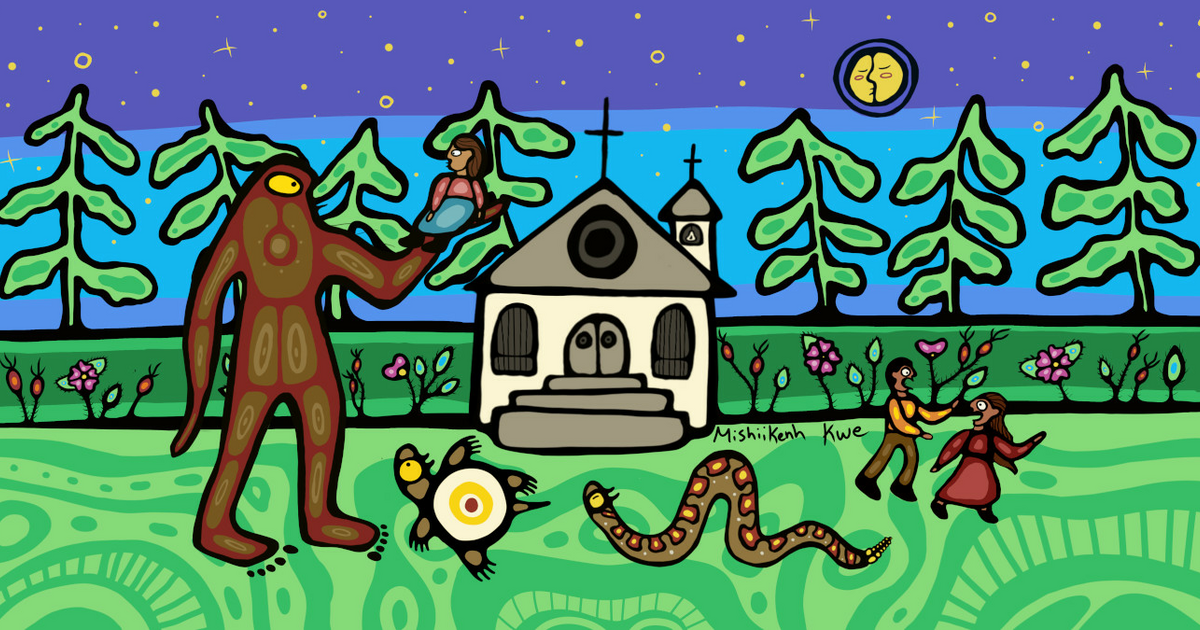
When people think about running a Mastodon instance they often picture servers, code, and technical infrastructure. They’re right! That’s important and non-trivial work, but it’s not the only kind of work involved in building a Mastodon community. The “people” work is just as hard, if not harder.
Yehuda and Tzipporah are the grandfather and grandkid duo that co-founded the instance Turtle Island Social. Their instance focuses on building community with Native/Indigenous people, other BIPOC (Black, Indigenous, and People of Color) people and allies. They are intimately familiar with both the joys and the difficulties experienced by community builders, especially marginalised ones. This kind of labor requires cultural knowledge, emotional resilience, and the ability to make nuanced decisions that reflect Native values and priorities.
On Turtle Island Social, Yehuda and Tzipporah envision a thriving digital space where over a thousand distinct Indigenous nations can celebrate their arts, revive their languages, build economic stability, and nourish each other. Read on to learn more about their story.
Hannah: First, can you tell us a little bit about yourselves?
Yehuda: I’ve been online since 300 baud modems were the rage. For most of my IT career I chased the big money, but by the 2000’s I was disillusioned. I’m Native (Mvskoke, an enrolled citizen of the Muscogee (Creek) Nation) and Jewish. I lean a little more towards my mother’s Native culture which heavily values and prioritises community over the individual.
Like many Native people, we are reconnected urban Natives. We’re coming back from the largest genocide in history and the near extinguishment of our cultures. Ten years ago when I retired, I became acutely aware that I had been negligent in passing down my Native culture to my descendants. My work hard, play hard ethics had overridden all. I was determined to undo that to the best of my abilities.
Now everything I do is for my grandkids and their education, including their Mvskoke culture. Turtle Island Social is one of the vehicles for this, and it also benefits all other Native/Indigenous people. We all feed and nourish each other. All of us grow and our Native future looks brighter all the time.
Tzipporah: Of course! I’m Mvskoke, Jewish, Two-Spirit, and I live in Chicago with my kitty Marceau. I’m a full time beader and artist, and I’ve been selling my work on my website, Cvkvlv.com, for going on three years now.
My works centres the Mvskoke language and the natural world. The name of my brand is Cvkvlv (Chuh-kuh-luh), for the Ivory-Billed Woodpecker which is unfortunately extinct. Our language and culture are not yet extinct, but they are endangered, so my goal is to use my work to keep them alive and bring attention to them.
Hannah: What about your community inspires you?
Tzipporah: Everything about our Native community inspires me; it’s the Native cultures, the arts, the artists, the spiritual aspects, the revival of Native languages and other practices. It’s the knowledge and support, and so much more. It’s building economic stability and sometimes it’s mutual aid. It’s Two-Spirit and LGBTQ people who have been revered by our cultures since time immemorial. It’s history that isn’t white culture pandering to us, or downright inaccurate. It’s protection and moderation that reflects, understands and prioritises Native views.
I’m especially inspired by the other artists in my community. We’re all spread out, but we find each other on social media, in community centres, at powwows. We teach each other and learn from each other. I wouldn’t be where I am now if not for them.
Yehuda: Native community is of course the camaraderie of all Native and Indigenous relatives across the Turtle Island continent, as well as the world-wide Indigenous and BIPOC peoples and some amazing allies. Tzipporah and I are co-admins of Turtle Island Social. I’m the old guard and they are the new guard. Their part in our story is more important than mine. They’re the future of Turtle Island Social and our people, along with their generation of growing Native leaders.
Hannah: Why did you start Turtle Island Social?
Yehuda: When Elon Musk bought Twitter, Tzipporah and I heard about and joined an Indigenous Mastodon instance. We saw promise. Within weeks we started our own Mastodon instance, which was very targeted to the Mvskoke people, Mvskoke.social. Soon after, we decided we wanted to build a community for other tribes on Mastodon too. I built another self-hosted instance, Woodpecker.social. We loved that domain name—woodpeckers are important medicine birds for the Mvskoke and other Native Nations—but we felt it wasn’t instantly recognisable as a server for Native Indigenous people, which brought us to our current name, Turtle Island Social. Now we use Masto.host, managed Mastodon server hosting, so Tzipporah and I can focus on community building.
Tzipporah: Most importantly with managed hosting, Turtle Island Social became something I could take the reins of 100%. I’ve been co-admining Indigenous social media instances with Yehuda for years now; I’m an artist and skilled application/e-commerce admin but no Linux person, so that has been super useful. We built Turtle Island Social to be a Native community space that isn’t operated by non-Native people, and we see a long future for it.
Hannah: What’s something that’s hard about running a Mastodon instance that you wish more people knew?
Tzipporah: More than anything, a Native Mastodon instance is about protecting Native/Indigenous/BIPOC people from an often hostile online world. Back in the beginning, as we were learning Mastodon software and before block lists were implemented, right away we received death threats. In one case we were attacked by a group of people that said we should be scalped.
Yehuda: Immediately, moderation tools and the ability to use them without delay became critical. Today Turtle Island Social has 5 moderators including Tzipporah and I. From day one until today we regularly receive reports that are purely racist in nature. Native/Indigenous/BIPOC people need Native/Indigenous/BIPOC moderation.
I would like to shout out to our moderators Val, Amanda, and Miyo, as well as former mods Ina and Michelle. Turtle Island Social wouldn’t be the same without them.
Hannah: What can Mastodon/Fediverse leaders/advocates do to help server admins grow their instances and protect their communities?
Tzipporah: It’s super important for Native/Indigenous/BIPOC communities to have input in Fediverse development decisions. Mastodon is working on onboarding, blocklists, and remote post storage and we’re excited to see where those things could go with Native/Indigenous/BIPOC input, and how that would improve the Fediverse for everyone. Another thing that we hope also gets some development is the migration system; it needs to be greatly simplified to one screen and instance, and include all content; we know that’s something that will significantly help our communities by making it easier for instances to grow.
The inclusion of non-dominant cultures and diverse voices in leadership decisions is a mutual benefit for us and the dominant culture as well. That includes Native and Indigenous communities but also all marginalized people. The same way alt text helps makes things accessible to people with visual impairments but it also helps sighted people, the same issues that affect our communities affect social media users of all kinds.
Hannah: What’s next for your community — how can people get involved and support you?
Tzipporah: A successful Native community is a huge gorgeous mess. There are over a thousand Native/Indigenous Nations on the Turtle Island continent, all with their own cultures and practices. Community comes naturally to Native/Indigenous people, we don’t have to plan it.
Yehuda: Much of the Native/Indigenous community in real life is economically depressed—thanks to history of course—so financial support is always greatly appreciated. We have CashApp, Venmo and Ko-Fi links. We’re especially appreciative of commitments at our new Patreon. The less begging for dollars we do, the more community building we can do.
Help with #NativeVisibility #IndigenousVisibility is ultra-important. Follow us, boost us, patronise our businesses, buy our art, listen to our music, watch our movies and tv shows, and by ‘our’ I mean things actually produced by Native and Indigenous people. Abandon the stereotypes and white pandering voices, stop what I call Lakotaman’ing. We’re modern people!
Tzipporah: Yehuda and I believe in Mastodon, we are very committed to the long haul. People talk more on Mastodon and the fediverse compared to other platforms; it becomes more personal faster, but ultimately how easily people can find and get set up on the server is the most important thing. Mastodon has amazing potential in our opinion. It’s open source, free, and runs on inexpensive virtual hardware. We feel that ultimately Mastodon could host the largest, best and most enduring Native/ Indigenous/ BIPOC communities.
Thanks to Tzipporah and Yehuda for sharing their story with us. If you want to meet them or learn more about Turtle Island Social, try reaching out on Mastodon or sign up for a Turtle Island Social account.
- https://turtleisland.social/@Yehuda
- https://turtleisland.social/@Tzipporah
- (Check out their beadwork and support their art and work!)
If you’re interested in seeing more of the communities building a home on Mastodon, check out our Server Directory.
Thank you for supporting Mastodon
We develop and maintain the free and open source software that powers the social web. There is no capital behind this — we rely entirely on your support.