
Updates from the Mastodon team

Mastodon quick start guide
So you want to join Mastodon and get tooting. Great! Here's how to dive straight in.
Nico
Guest
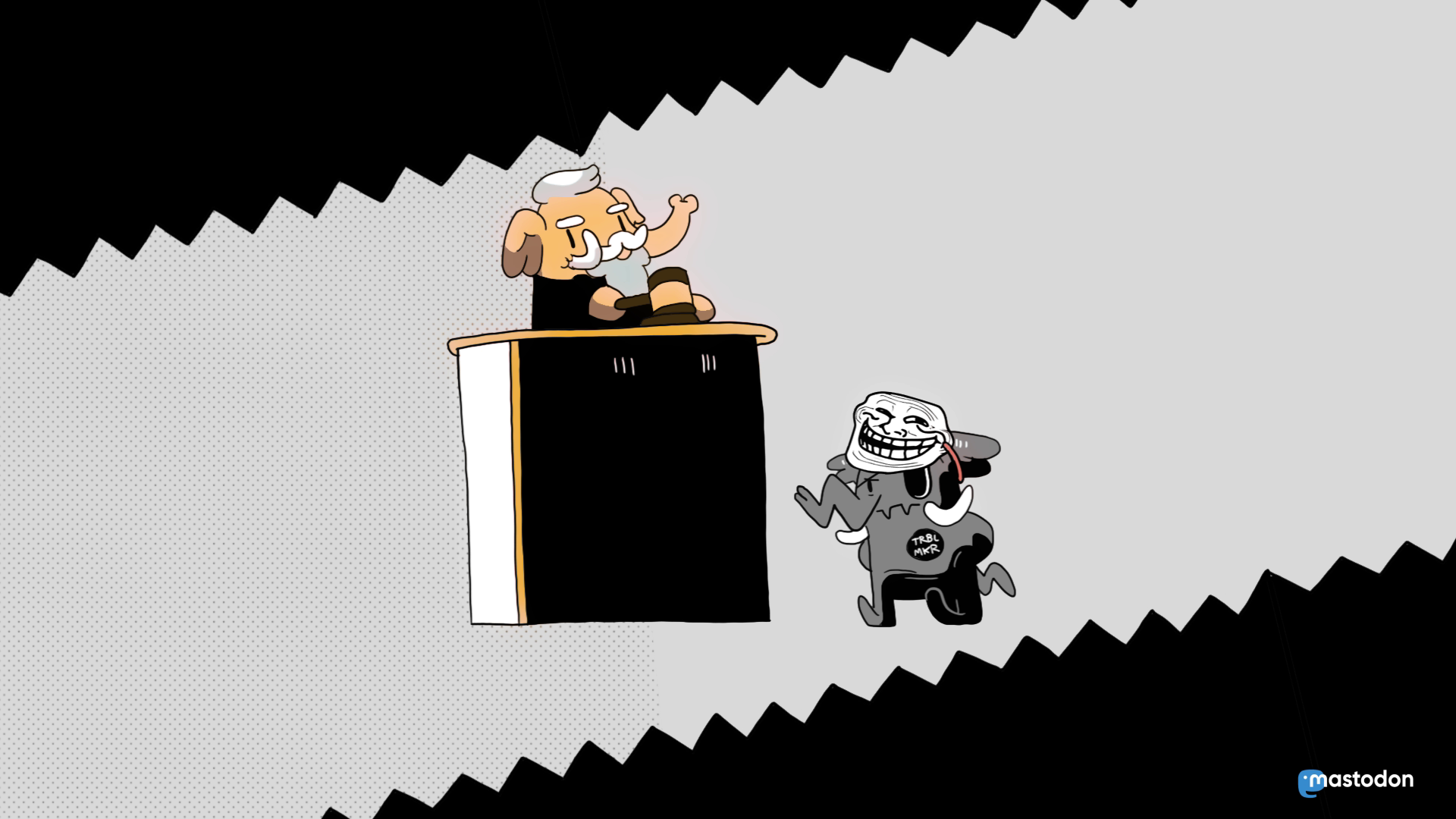
Cage the Mastodon
A year ago I wrote about Mastodon’s improvements over Twitter’s lacking protections against abuse and harassment. Development in that area has not been standing still, and it’s about time we do another comparison.

Eugen Rochko
Strategy & Product Advisor, Founder
How to make friends and verify requests
In the previous tutorial we have learned how to send a reply to another ActivityPub server, and we have used mostly static parts to do it. Now it’s time to talk about how to subscribe to other people and receive messages. The inbox Primarily this means having a publicly accessible inbox and validating HTTP signatures. Once that works, everything else is just semantics. Let’s use a Sinatra web server to implement the inbox.
Eugen Rochko
Strategy & Product Advisor, Founder
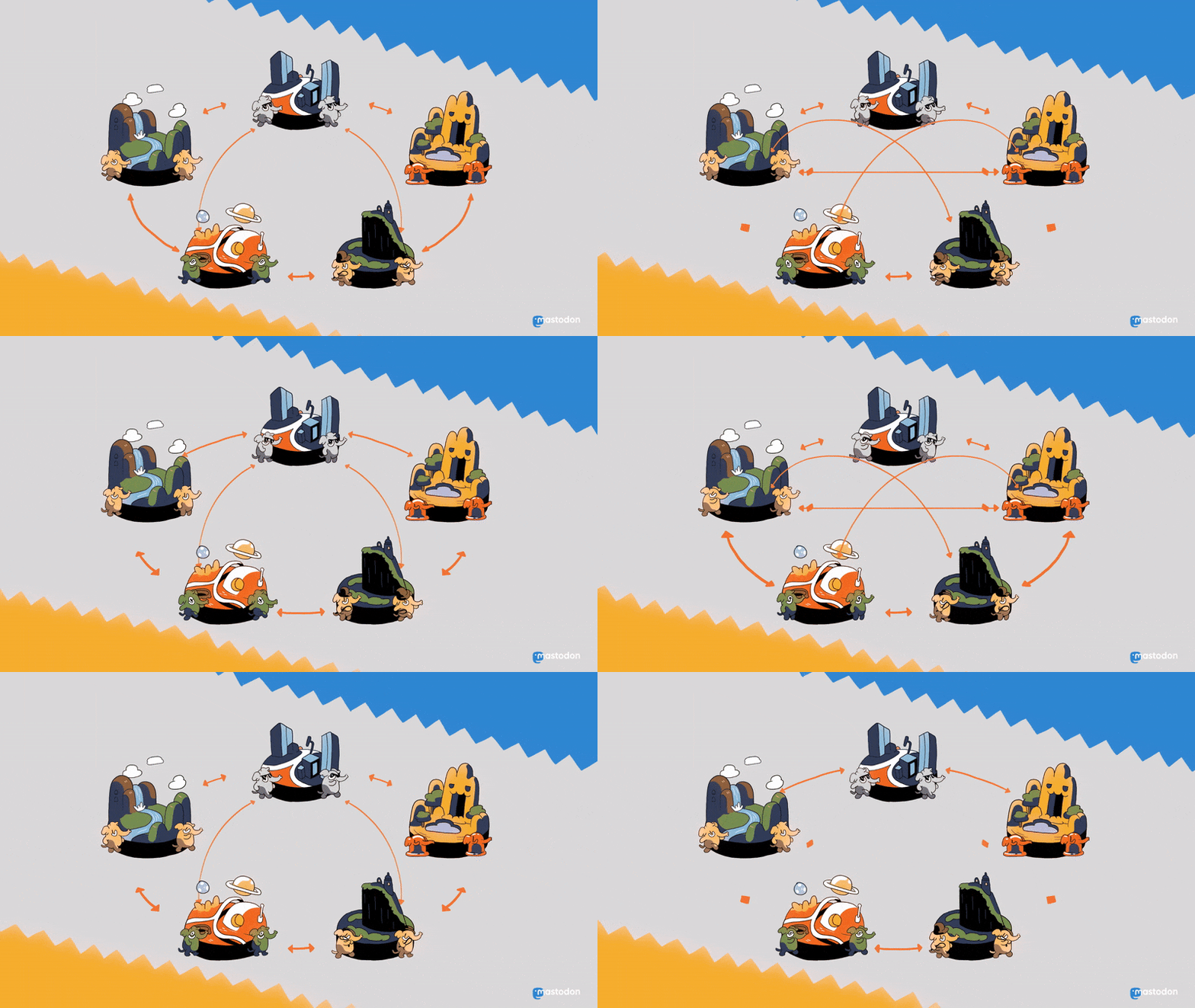
Why ActivityPub is the future
We often tout things like “Mastodon is based on open web protocols” as one of its advantages. I want to elaborate why exactly that’s a good thing.
Eugen Rochko
Strategy & Product Advisor, Founder

Why we must oppose the new copyright directive
A committee of members of the European Parliament have voted to approve Article 11 and Article 13, which pose a risk to the decentralization of the web and freedom of creative expression.
Eugen Rochko
Strategy & Product Advisor, Founder

How to become a successful artist on Mastodon
I follow many talented artists on Mastodon, and over my 2 years of being on the platform I have noticed some common patterns that may help a newcomer find their audience on here, too.
Eugen Rochko
Strategy & Product Advisor, Founder
How to implement a basic ActivityPub server
Today we’ll be looking at how to connect the protocols powering Mastodon in the simplest way possible to enter the federated network. We will use static files, standard command-line tools, and some simple Ruby scripting, although the functionality should be easily adaptable to other programming languages. First, what’s the end goal of this exercise? We want to send a Mastodon user a message from our own, non-Mastodon server. So what are the ingredients required? The message itself will be formatted with ActivityPub, and it must be attributed to an ActivityPub actor. The actor must be discoverable via Webfinger, and the delivery itself must be cryptographically signed by the actor.
Eugen Rochko
Strategy & Product Advisor, Founder
If you could edit tweets
A fresh new release of the federated social network software is here, and while the primary focus of it has been on fixing bugs and improving performance, it brings a couple of notable new features to the board. Delete & Redraft There are legitimate reasons why social media platforms rarely, if ever, have an editing function. In an environment where content spreads like wildfire in a matter of minutes, you could easily conceive of nefarious misuses such as creating a post about something agreeable and positive, and, once it reaches critical mass, changing the content to something malicious.
Eugen Rochko
Strategy & Product Advisor, Founder

#DeleteFacebook
Deep down you always knew it. On the edge of your perception, you always heard the people who talked about the erosion of privacy, that there was no such thing as free cheese, that if you don’t pay — then you’re the product. Now you know that it’s true. Cambridge Analytica has sucked the data so kindly and diligently collected by Facebook and used that data to influence the US elections (and who knows what else).
Eugen Rochko
Strategy & Product Advisor, Founder