
Updates from the Mastodon team
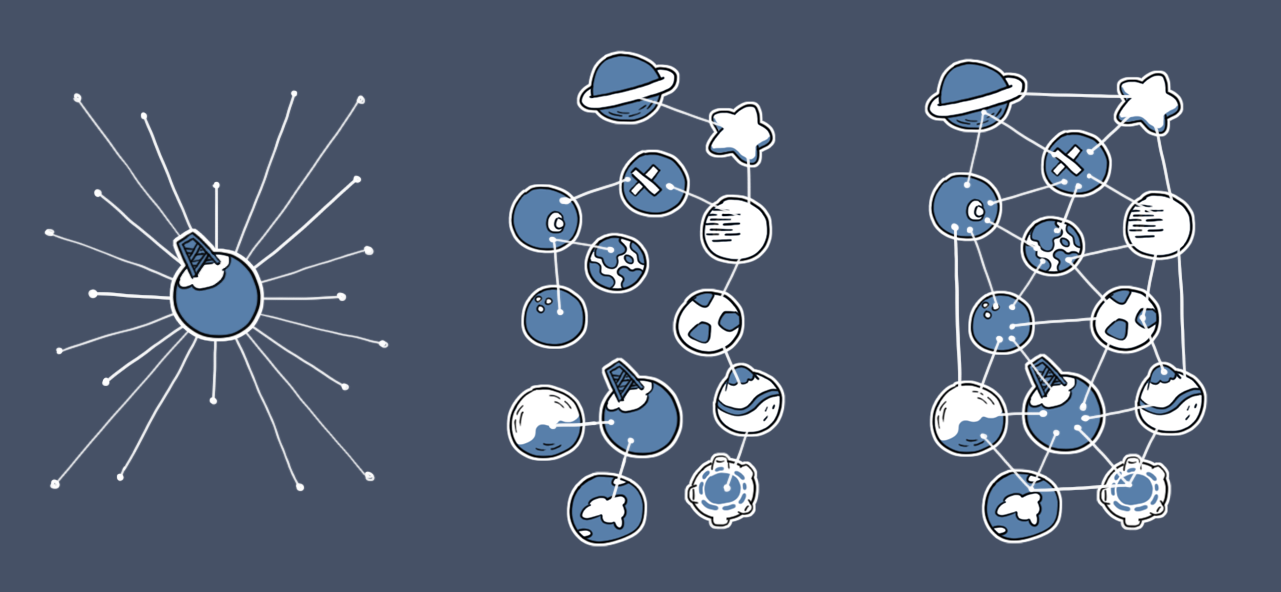
Why does decentralization matter?
Reasons why you should care about how your social network is run and structured

Eugen Rochko
Strategy & Product Advisor, Founder

#DeleteFacebook
Deep down you always knew it. On the edge of your perception, you always heard the people who talked about the erosion of privacy, that there was no such thing as free cheese, that if you don’t pay — then you’re the product. Now you know that it’s true. Cambridge Analytica has sucked the data so kindly and diligently collected by Facebook and used that data to influence the US elections (and who knows what else).
Eugen Rochko
Strategy & Product Advisor, Founder

Replacing the Pillars of the Internet
This article assumes you’ve read my previous two blog posts, here and here. Why not give them a quick read if you haven’t already? To balance out the doom and gloom of an internet wholly under the thrall of corporate interests and fed through single channels devoid of competition, it’s worth being aware of just how pervasive and powerful an idea decentralization is in the 21st century. The structure of things now are remnants of the way things have always been done: we trust in a singular authority to manage everything behind the scenes so that our experience on this side remains seamless. ISPs, once a central requirement, are increasingly becoming outmoded, antiquated, and unnecessary. Do we need a middleman managing what is, for all intents and purposes, access to a utility?
Tremaine Friske
Guest
The Centralization of Power on the Internet
The online space is dominated by a small handful of companies that command a disproportionate amount of power and influence over the entire online experience, not just social media. So much influence that several of these companies have fundamentally altered many aspects of life offline; often described with the floral language of the privileged as ‘disruptive,’ but more clearly understood in the common tongue as ‘destructive.’’ The five most valuable companies at the end of 2017 were, in order: Apple, Alphabet (the company that owns Google), Microsoft, Amazon, and Facebook. each business not only depends on, but commands large parts of the technological landscape. What do all these companies have in common?
Tremaine Friske
Guest

This Isn’t About Social Media. This is About Control.
Human beings, above all else, are storytellers. It’s how we relate to our own past, or personalities, or each other. It’s how to connect with the world around us, make sense of events, and assess values. We rely on stories to function as agents in the world. These stories are often told in-person: “oh, I did this today, I felt like this, then this happened and I was like ‘whoa no way!’” In times past, we relied on an oral tradition to pass on values, moving towards the written form as literacy grew and cities became the primary way people lived.
Tremaine Friske
Guest
Two reasons why organizations should switch to self-hosting social media
My name is Eugen Rochko and I’m the creator of Mastodon, a free, open-source federated social network server. The flagship instance mastodon.social has over 23,000 users and is growing fast. You can check it out here. If your organization is hosting a Mastodon instance, it is essentially a self-perpetuating brand awareness campaign. When people from other instances talk to or follow your users, they see your domain name all the time, since it is part of their globally unique usernames. It’s like those sticker ads on cars, except you don’t have to pay for them and it doesn’t disturb anyone because you’re providing a service.
Eugen Rochko
Strategy & Product Advisor, Founder
The power to build communities
Mark Zuckerberg’s manifesto might be well-spirited, but one thing in it is fundamentally wrong: In times like these, the most important thing we at Facebook can do is develop the social infrastructure to give people the power to build a global community that works for all of us. Facebook isn’t, and can never be, a platform where people have the power to build anything. Facebook doesn’t even have the pretense of a non-profit like Wikipedia or Mozilla; there is no doubt about the company’s main focus — extracting as much as possible from you — by analyzing your data and showing you ads in exchange for advertiser’s money. A future where Facebook is the global social infrastructure, is a future with no refuge from advertising and number crunching.
Eugen Rochko
Strategy & Product Advisor, Founder