
Updates from the Mastodon team
Twitter suspends Mastodon account, prevents sharing links
On Dec 16, Twitter suspended our @joinmastodon account after we shared a link to the newly registered Mastodon account of @ElonJet, an account that broadcasts public flight path data of Elon Musk’s private jet, which was previously suspended from Twitter itself. At the same time, accounts of multiple journalists from major publications such as CNN, The New York Times, The Washington Post, as well as various independent journalists, were likewise suspended for either linking to the account itself or talking about the event. We also started receiving reports that users were unable to tweet links to any Mastodon servers, including ones completely unrelated to the @ElonJet account, encountering an error message claiming that the links were identified as “potentially harmful”, among them George Takei, making it more difficult for people to share their Mastodon profiles.

Eugen Rochko
Strategy & Product Advisor, Founder
Twitter buyout puts Mastodon into spotlight
The news of Elon Musk buying Twitter has put Mastodon into the public spotlight as an alternative social network, rapidly exploding our growth with over 30,000 new users in just a single day. This is because at Mastodon, we present a vision of social media that cannot be bought and owned by any billionaire, and strive to create a more resilient global platform without profit incentives. We believe that your ability to communicate online should not be at the whims of a single commercial company.
Eugen Rochko
Strategy & Product Advisor, Founder
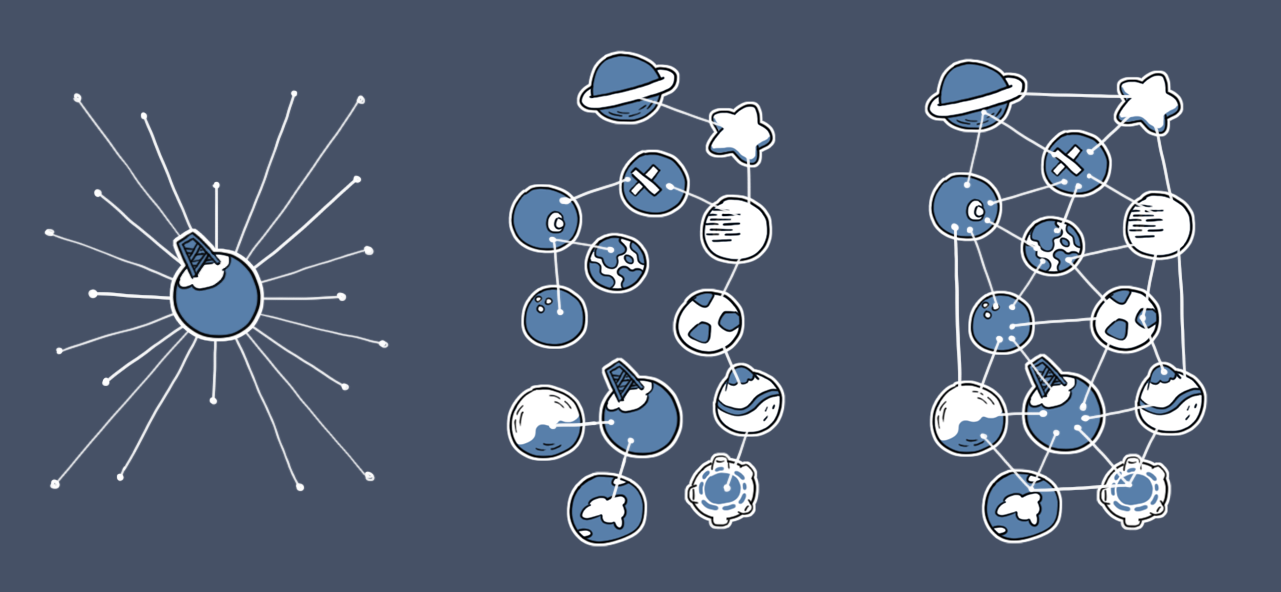
Why does decentralization matter?
Reasons why you should care about how your social network is run and structured
Eugen Rochko
Strategy & Product Advisor, Founder
From Tumblr to Mastodon
A lot of artists have lost their blogs in the Tumblr purge. Here are 5 reasons why Mastodon is the perfect alternative.
Eugen Rochko
Strategy & Product Advisor, Founder
Replacing the Pillars of the Internet
This article assumes you’ve read my previous two blog posts, here and here. Why not give them a quick read if you haven’t already? To balance out the doom and gloom of an internet wholly under the thrall of corporate interests and fed through single channels devoid of competition, it’s worth being aware of just how pervasive and powerful an idea decentralization is in the 21st century. The structure of things now are remnants of the way things have always been done: we trust in a singular authority to manage everything behind the scenes so that our experience on this side remains seamless. ISPs, once a central requirement, are increasingly becoming outmoded, antiquated, and unnecessary. Do we need a middleman managing what is, for all intents and purposes, access to a utility?
Tremaine Friske
Guest

Twitter is not a public utility
Isn’t it a bit strange that the entire world has to wait on the CEO of Twitter to come around on what constitutes healthy discourse? I am not talking about it being too little, too late. Rather, my issue is with “instant, public, global messaging and conversation” being entirely dependent on one single privately held company’s whims. Perhaps they want to go in the right direction right now for once, but who’s to say how their opinion changes in the future? Who is Twitter really accountable to except their board of directors?
Eugen Rochko
Strategy & Product Advisor, Founder

The Centralization of Power on the Internet
The online space is dominated by a small handful of companies that command a disproportionate amount of power and influence over the entire online experience, not just social media. So much influence that several of these companies have fundamentally altered many aspects of life offline; often described with the floral language of the privileged as ‘disruptive,’ but more clearly understood in the common tongue as ‘destructive.’’ The five most valuable companies at the end of 2017 were, in order: Apple, Alphabet (the company that owns Google), Microsoft, Amazon, and Facebook. each business not only depends on, but commands large parts of the technological landscape. What do all these companies have in common?
Tremaine Friske
Guest

This Isn’t About Social Media. This is About Control.
Human beings, above all else, are storytellers. It’s how we relate to our own past, or personalities, or each other. It’s how to connect with the world around us, make sense of events, and assess values. We rely on stories to function as agents in the world. These stories are often told in-person: “oh, I did this today, I felt like this, then this happened and I was like ‘whoa no way!’” In times past, we relied on an oral tradition to pass on values, moving towards the written form as literacy grew and cities became the primary way people lived.
Tremaine Friske
Guest
Learning from Twitter’s mistakes
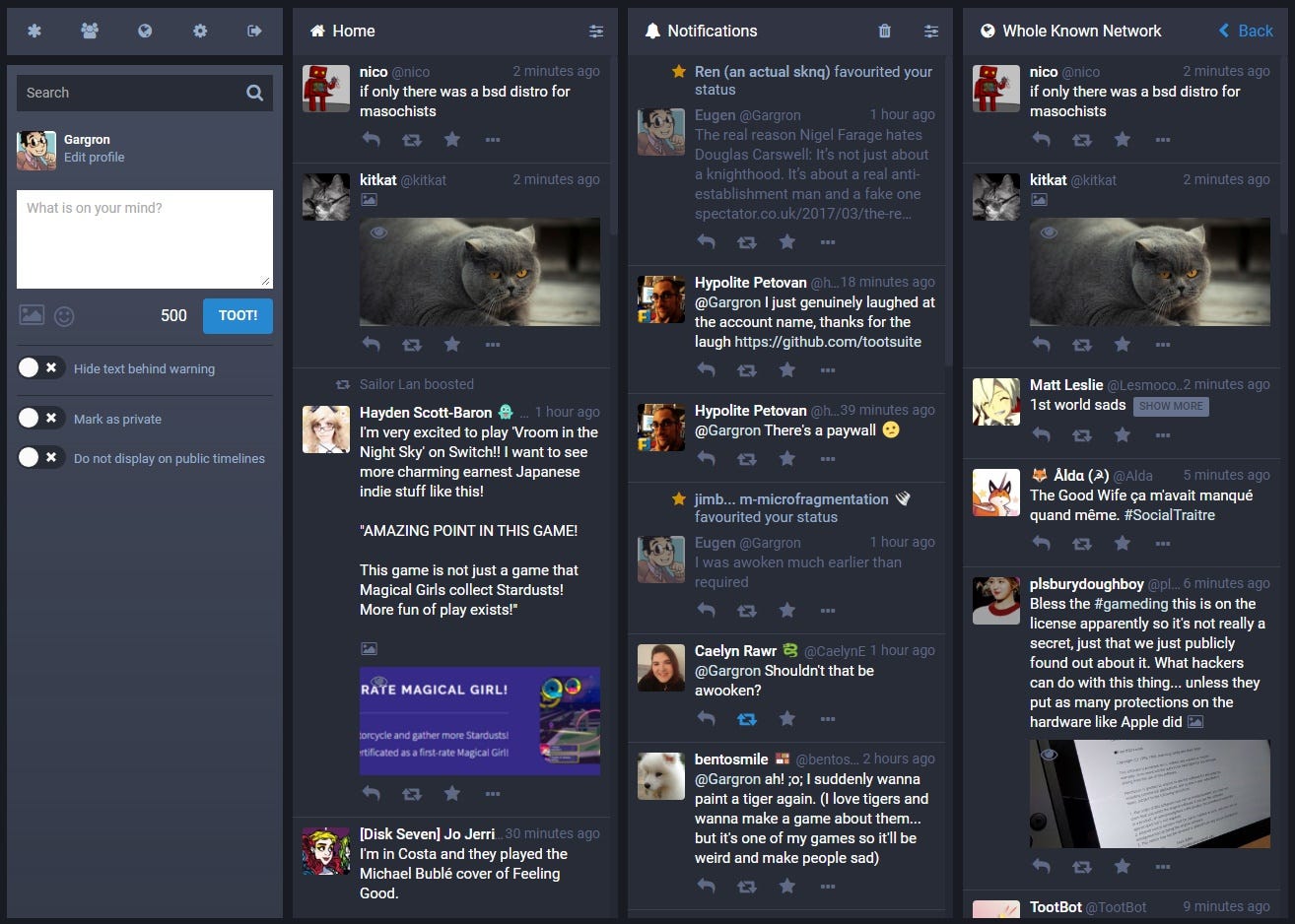
My name is Eugen Rochko and I’m the creator of Mastodon, a free, open-source federated social network server. The flagship instance mastodon.social has over 22,000 users and is growing fast. You can check it out here. Very early on in the development of Mastodon I’ve decided that centralization and unexpected algorithmic changes were not the only one of Twitter’s problems. Harrassment and tools to deal with it have always been lacking on Twitter’s end. I reached out to people who have been affected by it to collect ideas. Here is what I gathered:
Eugen Rochko
Strategy & Product Advisor, Founder